
Visit
Exploring Kathmandu
The Three Stupas
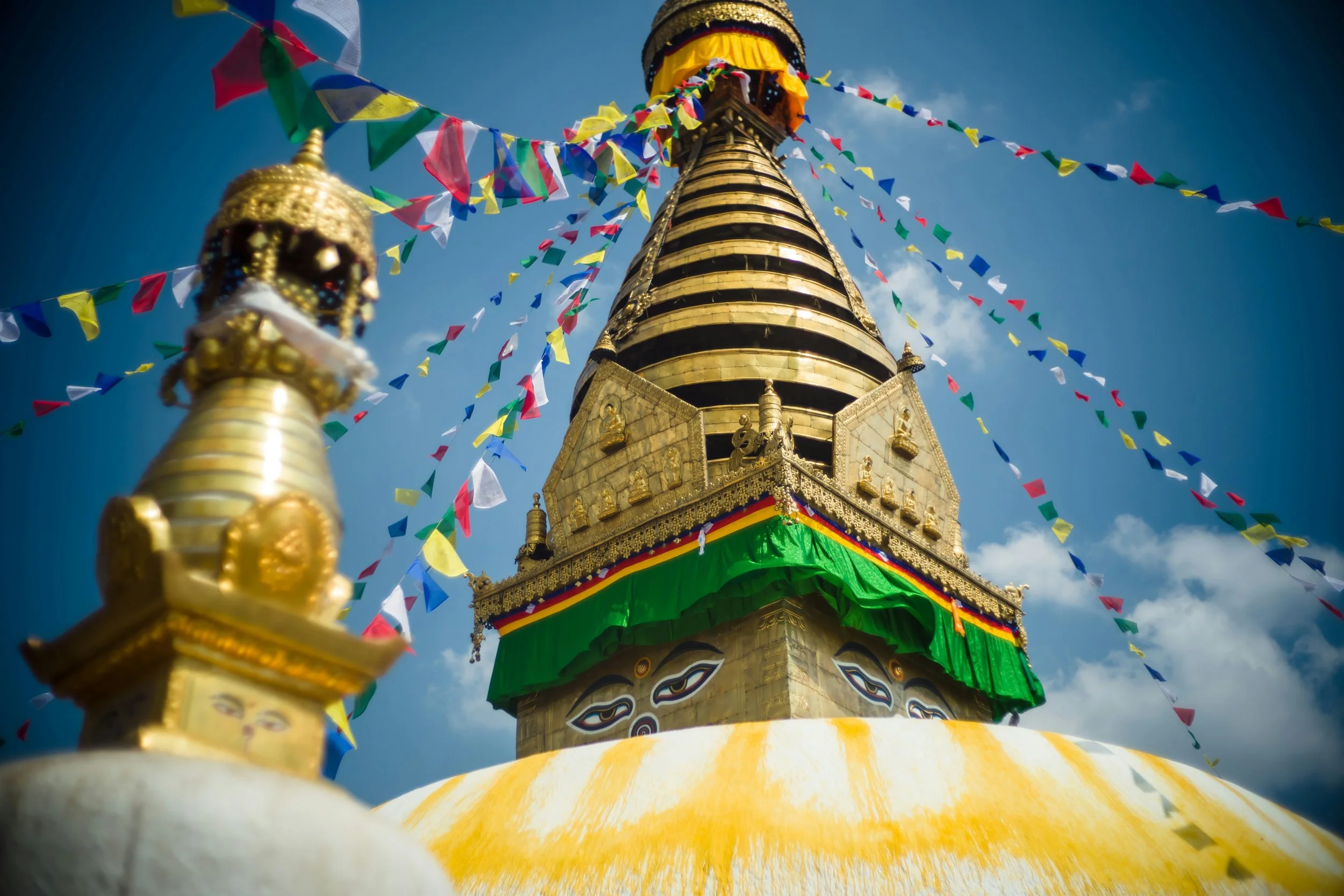
Swayambhunath Stupa Known as the Monkey Temple, Swayambhunath is found on a hilltop to the west of Kathmandu, just across Ring Road from Ösel Ling. The complex contains a stupa, temples, shrines, a Tibetan monastery, museum and library, and is one of the crowning glories of Kathmandu Valley architecture.
Boudha Stupa The great stupa of Boudhanath (Jarung Kashyor, Wish-fulfilling Stupa) is one of the most important Buddhist pilgrimage sites in the world. Built sometime after 600 CE, it is the centre of all activity in Boudha and unmatched in grace and purity of line among Nepal's stupas.
Namo Buddha Stupa One of the important pilgrimage spots in the Kathmandu Valley and the site of Thrangu Rinpoche's Thrangu Tashi Yangtse Monastery. According to the Jatakas, this is where the Bodhisattva Mahasattva — a former incarnation of Buddha Shakyamuni — offered his body to a starving tigress and her cubs.
The Village of Boudha
Located 7 km northeast of central Kathmandu, Boudha is the heart of the Tibetan community in Kathmandu, home to most of the teachers and their monasteries in the valley. It is bustling with activity at all hours and offers some of the best shopping for Buddhist statues, paintings, and Himalayan crafts in the region. This is a must-visit site.
Monasteries in Boudha Boudha is home to some 50 monasteries from all schools of Tibetan Buddhism. Principal among these are Ka-Nying Shedrup Ling (the White Gompa), the monastery of Chokyi Nyima Rinpoche (Mingyur Rinpoche's eldest brother); HH Dilgo Khyentse Rinpoche's Shechen Monastery; Thrangu Tashi Rinpoche's monastery; the monastery of Jamgön Kongtrul Rinpoche; and the well-known Gelugpa monastery, Kopan Gompa.
Three Durbar Squares
Kathmandu Durbar Square Where the city's kings were once crowned and ruled, Kathmandu's Durbar Square is a UNESCO World Heritage Site. At its southern edge stands Kumari Chouk, the residence of the Kumari — a young girl worshipped as a living embodiment of the Hindu Goddess.
Patan Durbar Square A UNESCO World Heritage Site, Patan lies south of Kathmandu across the Bagmati River and is home to Nepal's finest collection of temples and palaces. Founded in the 3rd century, it is home to the Newari people, the earliest Buddhist practitioners in Nepal and the finest producers of Buddhist statuary in the world. Mingyur Rinpoche's father, Tulku Urgyen Rinpoche, was considered the guiding Tibetan teacher for the inhabitants of Patan.
Bhaktapur Durbar Square Once the grandest of the three Durbar Squares, Bhaktapur housed the Malla Kings of Nepal from the 14th to 15th century. Many of its buildings have been lost to earthquakes over the centuries, but it remains a remarkable site.
Markets & Neighborhoods
Thamel Since the 1960s, Thamel has been the home of the backpacker crowd coming to Kathmandu from around the world. The architecture is superb and the shopping is spectacular, with every variety of Nepali products and souvenirs available.
Asan Tole Market Asan Tole is the very heart and soul of Kathmandu — a walk through Asan will give you a glimpse into everyday life in Nepal. One of the most well-known historical locations in the city, it is famed for its bazaar, festival calendar, and tremendous variety of merchandise, from foodstuffs and spices to textiles and electronics. Asan is just a short walk from Thamel.
Golden Temple — Kwa Bahal
The grandest Newari-style monastery in Patan, the Golden Temple gets its name from the gilded metal plates covering most of its frontage. The Shakyamuni Buddha at its heart is considered the most historically important and beautiful statue in Nepal. The temple complex also includes Itum Bahal — a famous temple dedicated to Tara, also known as 'Talking Tara' — and a temple consecrated by Atisha said to house the original Prajnaparamita text in gold.
Pashupatinath Cremation Ghats
Near Boudha, on the banks of the sacred Bagmati River, are the burning ghats of Pashupatinath — the Nepali equivalent of Varanasi on the Ganges. The cremation ghats are used for open-air cremations and are constantly in use. The surrounding temples are architecturally beautiful, and Pashupatinath is also where many Nepali Hindu Sadhus (mendicants) live.
Buddhist Sites Outside Kathmandu
Lumbini The birthplace of Sakyamuni Buddha, Lumbini also encompasses Ramgram Stupa (the only intact original relic stupa of the Buddha), Tilaurakot (where Buddha lived for 29 years as a prince), and the birthplaces of past Buddhas Krakuchanda and Kanakamuni. Recommended: 2 nights / 3 days with flights.
Maratika An important site associated with Guru Padmasambhava, where he attained the siddhi of immortality with his consort Mandarva. Several caves are located in the area. Recommended: 2 days / 1 night.
Hyolmo The cave Tagphug Sengezong (Tiger and Lion Cave) in the Helambu Region is the practice place of Milarepa, where he undertook a three-year retreat. Prophesied by Shakyamuni Buddha in the Avatamsaka Sutra as a blessed land for spiritual practice. Recommended: 2 days / 1 night.
Temal Blessed by Guru Padmasambhava, this is where he hid termas and planted the Bodhichitta plant whose seeds are regarded as the best for a mala. The cave Yarinag is where the Guru subdued the demonic Black Yaksha. Recommended: 2 days / 1 night.
Risheshvara / Chumik Jangchub One of seven places of Guru Padmasambhava near the Kathmandu Valley. He blessed the site with rock-water spouts, and the spring water is considered extremely sacred and collected for ritual usage. Recommended: 2 days / 1 night.